Trick-or-treating without a parent: a safety plan for tweens
By Vahe Mailyan, Founder, SafeLoop · · 9 min read
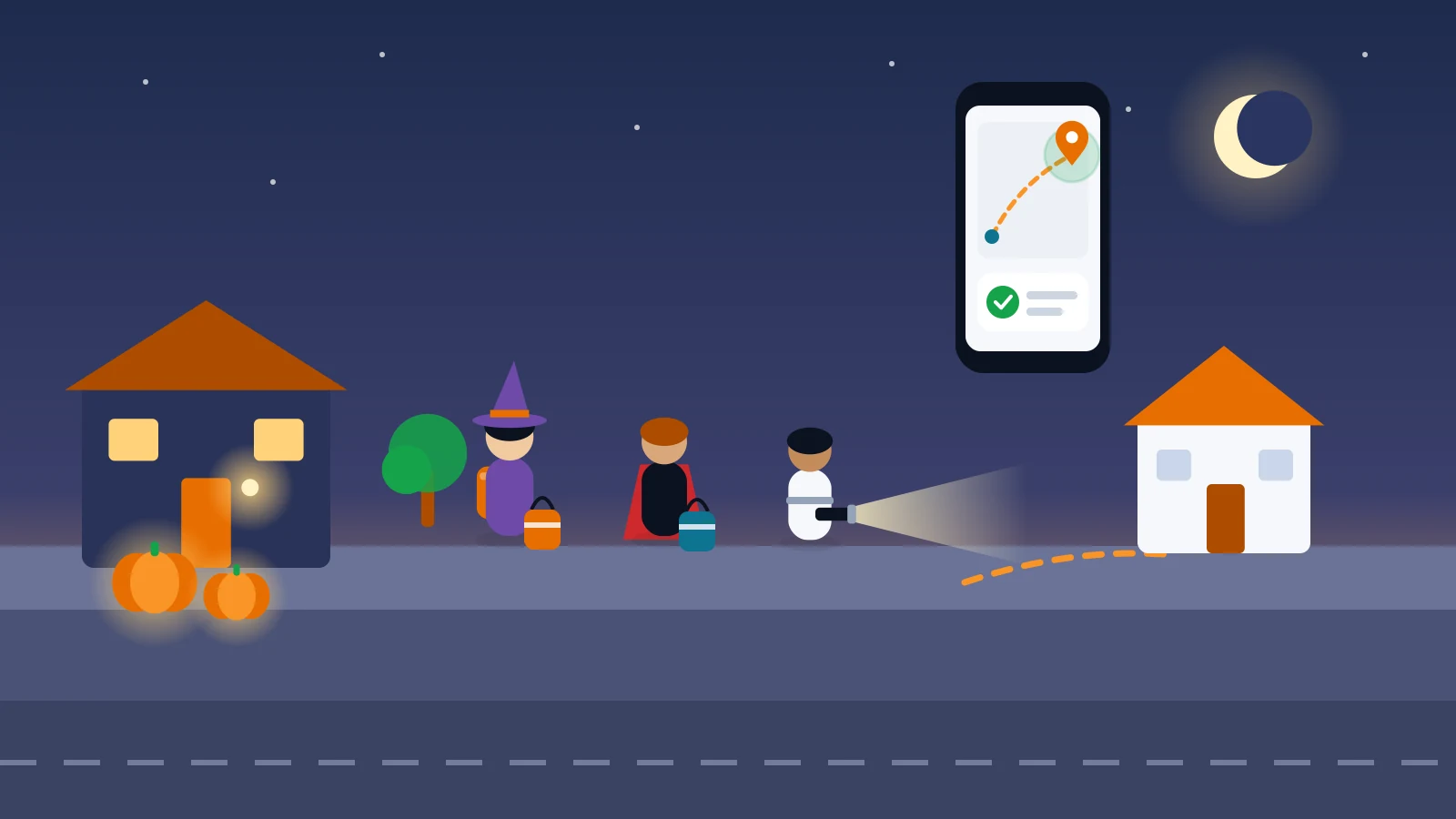
Every family hits this Halloween sooner or later. Your kid, who wore the dinosaur costume you picked three years ago, now announces that they're going trick-or-treating "with friends." Not with you. With friends. And you're standing in the kitchen trying to work out whether that's a reasonable request or a terrible idea.
I'm the founder of SafeLoop, a Los Angeles family-safety app, and I'm also a dad. I don't think there's one right answer for every 11- or 12-year-old. But I do think the difference between a fun first night out and a stressful one is almost always the plan you make before they leave the house. Here's the plan I'd want: how to decide if they're ready, the rules worth agreeing on, what to do about the phone and how to stay in the loop without following them from porch to porch.
Is your kid ready to trick-or-treat without you?
Start with the guidance. Safe Kids Worldwide recommends that adults join kids under 12 for trick-or-treating, and says that kids who are mature enough to go without supervision should stick to familiar, well-lit areas and go in groups. The reason is traffic, not monsters: Safe Kids says children are, on average, more than twice as likely to be hit by a car and killed on Halloween than on any other day of the year.
So age is a starting point, not the whole answer. Signs your child may be ready:
- They already handle smaller freedoms well. Walking home from school, going to the park with a friend, coming back when they said they would.
- They cross streets safely without reminders, even when they're excited and talking.
- They'll stay with the group instead of peeling off with one friend to chase the house with full-size candy bars.
- They know your number and address by heart, not just as a contact in their phone.
- They'll call you when plans change, even if they think you'll say no.
If a couple of those are shaky, there's a great in-between option: you walk half a block behind, or you sit on a friend's porch at the center of the route while the kids do the loop. They get the independence, you get to relax. If you're still building those skills, our readiness checklist for walking home alone covers the same street skills with a step-by-step plan.
Agree on the plan before they leave
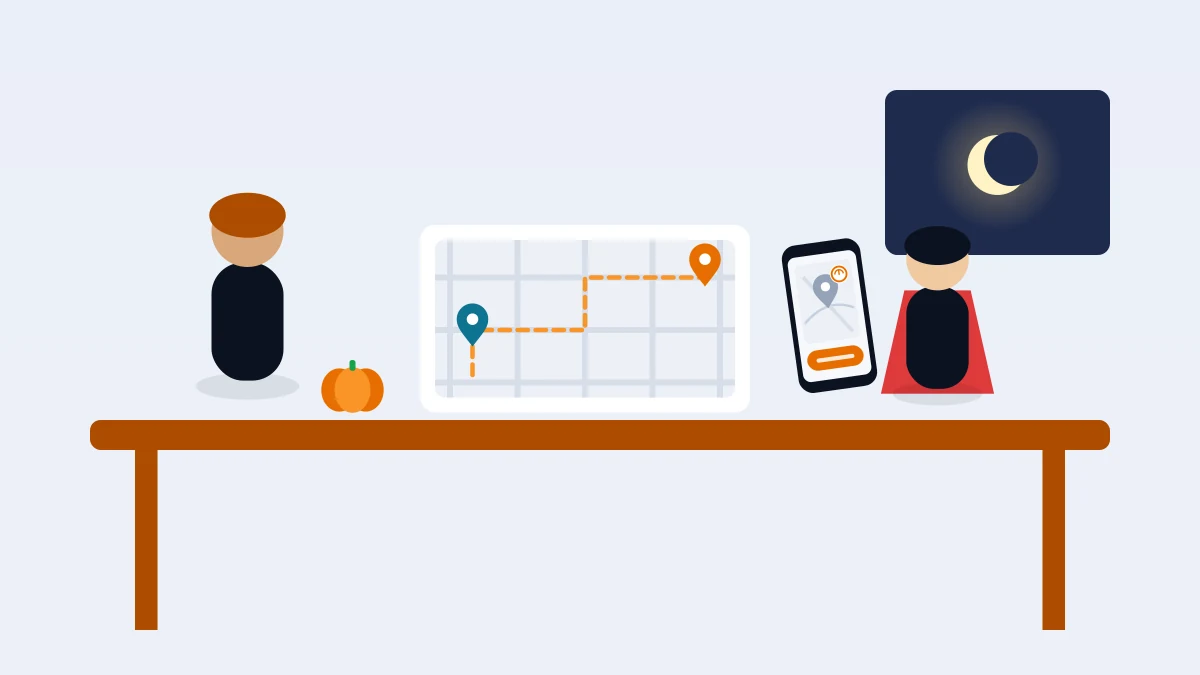
The American Academy of Pediatrics' Halloween safety tips put it simply for older kids: go in a group, review their plan and route, and agree on a specific time to be home. In practice, that means settling five things at the kitchen table, not on the doorstep:
- Who's going. Names of every kid in the group, and ideally a phone number for at least one other parent.
- Where. A set of streets you both know. Draw the boundary out loud: "From Maple to the park, not across the big road."
- When. A start time, a check-in time halfway through and a firm home time. Dark comes early at the end of October, so plan around the clock, not around the candy supply.
- How they get home. Walking together, being picked up at a set corner, or splitting up only at each kid's front door.
- What changes the plan. Anything that's not on the plan, a party, a different neighborhood, a ride from an older kid, needs a call to you first.
Write it in a text to your child so they have it on their phone. It sounds formal, but it removes a lot of arguing later.
Rules that keep them safe on the street
Most Halloween injuries don't come from strangers. They come from dark streets, excited kids and drivers who don't see them. A few rules cover most of the risk:
- Cross at corners and crosswalks, as a group, and look left, right and left again. No cutting between parked cars or out from driveways.
- Be seen. Reflective tape on costumes and bags, light colors where possible, and a flashlight or glow stick for everyone after dark.
- Phones down while walking. AAP specifically calls out distracted walking: texting, looking at a screen or listening to music while moving.
- Masks off when crossing, or skip them. Face paint beats a mask that blocks side vision.
- Sidewalks only. If there's no sidewalk, walk at the far edge of the road facing traffic.
- Only porches with the light on. And never go inside a home or a car for a treat, no matter how nice the person seems.
- Stick together. NHTSA suggests a buddy system so nobody walks home alone.
And one for the end of the night: treats get checked at home before anyone eats them. Tampering is rare, but it's a quick habit, and it matters a lot for kids with food allergies. If your child carries an epinephrine auto-injector, it goes in the bag.
What-if rules, decided in advance
Walk through the hard moments ahead of time, calmly:
- "What if the group splits up?" You stay with at least one friend and call me. Nobody walks home solo.
- "What if someone offers you a ride?" You say no and call me, even if it's someone you sort of know.
- "What if something feels wrong?" Go to a lit, busy place, a house with adults outside or a store, and tell an adult. Then call.
- "What if you get hurt or lost?" Call me. If it's an emergency, call 911 first. Make sure they know how to do both from the lock screen.
- "What if you're running late?" Text before the home time, not after.
Some families use a code word for "come get me, no questions asked tonight." It's worth it. A kid who knows they can leave without being lectured is a kid who calls.
The phone: charged, on and not the center of the night
If your child carries a phone, it's their lifeline, not their flashlight. A few minutes of setup helps:
- Charge it fully before they go out. A phone that dies at 7:30 pm is the most common way a fun night turns into a scary hour for parents.
- Use a real flashlight, not the phone's, so the battery lasts and their hands are free.
- Pocket at crossings, out for check-ins. Agree on when you'll text, and keep it short.
- Practice the SOS button if your family uses one, so they know what it does before they ever need it. Our guide to setting up an SOS button for kids covers how to practice without false alarms.
And if the phone goes quiet, start with the boring explanations: dead battery, no signal, a setting that changed. Our post on what to do when your kid turns off location sharing walks through how to tell the difference without starting a fight.
Stay in the loop without hovering
The temptation on Halloween night is to watch a dot move from house to house for two hours. That's stressful for you, and if your kid knows you're doing it, it takes the shine off the independence you just gave them.
What you actually need to know is smaller: did they get to the meeting spot, did they check in halfway, and did they get home by the time you agreed? A short check-in text covers the middle. For the start and the end, scheduled zones do the job quietly.
How it works in SafeLoop
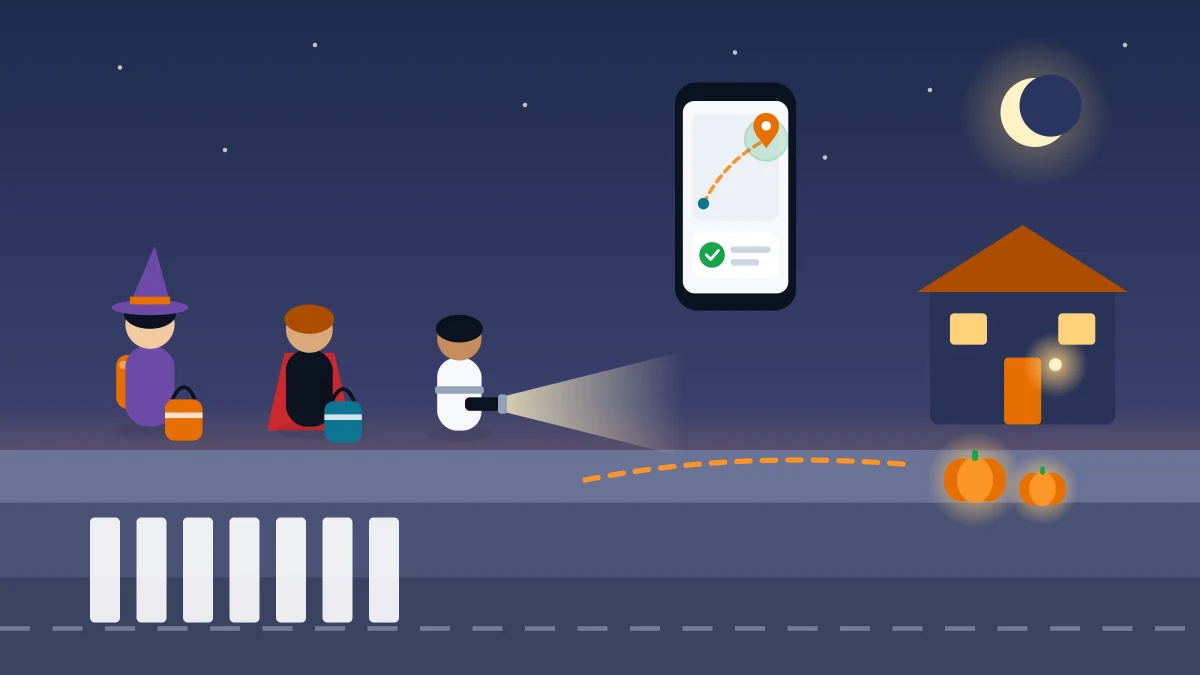
SafeLoop is built around scheduled zones. Each zone has its own weekly schedule and grace period, and zone alerts only fire inside those windows. For Halloween, you can add a window to your Home zone for the evening, say 8:00 to 9:30 pm, and you'll get an arrival alert when your child gets home. If the group meets at a friend's house first, a zone there tells you they made it to the starting point. Schedules repeat weekly, so remove the extra window the next day. A grace period gives a few minutes of slack, so the last house on the block doesn't become an alert. If the window is underway and no arrival has come in, that's your cue to send a text, not to panic. New to zones? Our guide to geofence alerts for kids walks through setting them up without the overload.
Between zones, SafeLoop is deliberately quiet. When your child is stopped somewhere outside every zone, like a porch three streets over, you don't see where they are. That's by design. Kids see the same zones, schedules and alerts their parents do, so nothing runs behind their back, though they don't see the live map parents use. Show your child the setup before they head out: "When you get to Maya's, I'll get a message. When you get home, I'll get another one."
If something goes wrong, the SOS button works on every plan: a 2-second hold notifies every guardian with live coordinates and keeps updating. On Standard and Pro, tamper alerts tell you if the app is removed, GPS is turned off or location permissions change.
A few product facts, stated plainly:
- Free: 1 member, 1 zone, zone arrivals and departures, and SOS.
- Standard ($4.99/month): 3 members, 5 zones, tamper alerts and trips.
- Pro ($9.99/month): 10 members, 10 zones, plus crash detection, speed alerts, route replay and a daily summary.
We never sell your family's data, and there are no ads. The details are in our privacy policy. To see how families use it, visit the families page.
Frequently asked questions
What age can kids go trick-or-treating without a parent?
There's no single right age. Safe Kids Worldwide recommends that adults join kids under 12. After that, it depends on your child: whether they cross streets safely without reminders, stay with a group, know your number by heart and call when plans change. A good in-between step is walking half a block behind or waiting at a spot in the middle of the route.
What rules should tweens follow when trick-or-treating with friends?
Agree on who's going, the exact streets, a halfway check-in and a firm home time. On the street: cross at corners as a group, carry a flashlight, keep phones down while walking, only visit porches with the light on, never go inside a home or car, and nobody walks home alone.
What time should kids be home from trick-or-treating?
Pick a specific time before they leave, based on when it gets dark where you live and what your child can handle. Many families also agree on a halfway check-in text. The key is that the home time is set in advance, not negotiated by text at 8 pm.
Can I get an alert when my child gets home on Halloween?
In SafeLoop, yes. Add an evening window to your Home zone's schedule, for example 8:00 to 9:30 pm, and you get an arrival alert inside that window. A grace period adds a few minutes of slack. The Free plan includes one zone with arrivals and departures.
Does my child see the same map I do in SafeLoop?
No. Kids see the same zones, schedules and alerts their parents do, so nothing runs behind their back,
Try SafeLoop free
Scheduled zones, SOS on every plan, and kids see what you see.
The Free plan covers 1 member and 1 zone with SOS alerts. Standard is $4.99/month per family (up to 3 members, up to 5 zones, 3-day history, SOS alerts, tamper alerts, trips (street-level routes)). Pro is $9.99/month per family (up to 10 members, up to 10 zones, 7-day history, crash detection, speed alerts, route replay, daily summary). Subscriptions are billed through the App Store or Google Play.
Keep reading
Is your child ready to walk home from school alone? A readiness checklist
There's no magic age for walking home alone. Here's how to tell if your child is ready, how to practice the route and a four-step plan to get from walking together to walking solo.
· 9 min read
Your kid turned off location sharing. Here's what to do next
Your child's location went dark. Before you take the phone, rule out the boring reasons, find out why, and set things up so it happens less, without turning it into a cat-and-mouse game.
· 7 min read
SOS button for kids: how to set it up so it actually gets used
An SOS button only helps if your child will press it. Here's how to set it up together, practice once, handle false alarms and know when 911 still comes first.
· 8 min readMore in our family safety guides and on the blog.